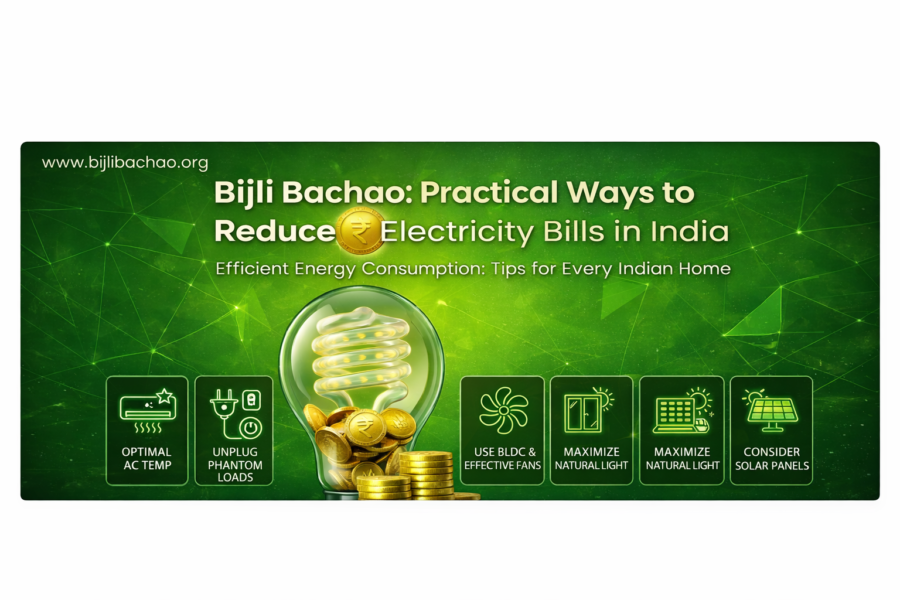
Bijli Bachao: Practical Ways to Reduce Electricity Bills in India
Electricity has become the foundation of modern life. Every home, office, shop, and industry depends on electrical power for lighting, cooling, communication, and daily operations. However, with increasing electricity consumption across India, households and businesses are experiencing rising electricity bills.
The challenge today is not whether we use electricity — it is how efficiently we use it.
The Bijli Bachao initiative promotes awareness about energy-efficient practices that help people save electricity, reduce electricity bills, and support a sustainable future. By adopting smart electricity usage habits and modern energy-efficient technologies, significant savings can be achieved without compromising comfort or productivity.
Why Electricity Bills Are Increasing in India
Many households in India notice that their electricity bills continue to increase even when their usage habits remain unchanged. This happens due to several factors related to inefficient electricity consumption.
Common reasons include:
- Use of outdated lighting systems
- High electricity consumption from old appliances
- Inefficient ceiling fans and cooling systems
- Standby power consumption from electronic devices
- Poor electrical wiring and voltage fluctuations
- Lack of awareness about energy-efficient solutions
When multiple inefficient systems operate together, the total electricity consumption increases significantly. This leads to higher monthly bills and unnecessary power wastage.
The Bijli Bachao movement focuses on identifying these inefficiencies and replacing them with smarter solutions.
Understanding Energy Efficiency in Simple Terms
Energy efficiency means using less electricity to perform the same task.
For example:
- An LED bulb produces the same brightness as a traditional bulb while consuming much less electricity.
- Modern energy-efficient fans provide strong airflow using significantly lower power.
- New air conditioning technologies maintain comfortable temperatures with optimized energy usage.
In simple terms, energy efficiency delivers better performance with lower electricity consumption.
Real-Life Scenario: How Electricity Is Wasted in Homes
Consider a typical urban home using the following appliances:
- 8 lights
- 4 ceiling fans
- 1 refrigerator
- 1 air conditioner
- 1 television
- Wi-Fi router and chargers
If these appliances are inefficient or used carelessly, electricity consumption increases rapidly.
For example:
- Replacing 60W bulbs with 9W LED bulbs can reduce lighting electricity usage by up to 85%.
- Traditional fans consuming 75–80W can be replaced with energy-efficient fans consuming 30–35W.
- Air conditioners running continuously at very low temperatures increase electricity usage significantly.
By making small improvements in appliances and usage habits, households can reduce electricity bills by 20–40% over time.
Smart Tips to Reduce Electricity Bill at Home
Saving electricity does not require drastic lifestyle changes. Simple daily habits can significantly reduce power consumption.
1. Switch to LED Lighting
LED lighting is one of the most effective ways to reduce electricity consumption.
Benefits of LED lighting include:
- Lower electricity consumption
- Higher brightness per watt
- Longer lifespan compared to traditional bulbs
- Reduced heat generation
Replacing conventional lighting with LED bulbs can reduce lighting electricity consumption by 60–80%.
2. Use Energy Efficient Appliances
Appliances with higher energy ratings consume less electricity while delivering better performance.
Examples include:
- Energy-efficient refrigerators
- Efficient ceiling fans
- Inverter air conditioners
- Smart washing machines
These appliances may cost slightly more initially but save electricity and money in the long run.
3. Control Air Conditioner Usage
Air conditioners are among the largest electricity consumers in homes.
To improve efficiency:
- Maintain AC temperature between 24°C and 26°C
- Clean filters regularly
- Ensure proper room insulation
- Turn off AC when the room is not in use
These simple practices can reduce air conditioning electricity consumption significantly.
4. Reduce Standby Power Consumption
Many devices consume electricity even when not actively in use.
Common examples include:
- Televisions
- Set-top boxes
- Wi-Fi routers
- Phone chargers
Switching off devices completely when they are not needed helps prevent unnecessary electricity wastage.
5. Improve Natural Lighting and Ventilation
Using natural daylight during daytime reduces the need for artificial lighting.
Similarly, good ventilation helps maintain comfortable temperatures without excessive reliance on cooling appliances.
These small changes can contribute to meaningful electricity savings.
Electricity Saving in Offices and Commercial Buildings
Businesses and offices consume large amounts of electricity every day. Implementing energy-efficient systems can significantly reduce operational costs.
Effective measures include:
- Installing LED lighting systems
- Using motion sensors for lighting control
- Upgrading to energy-efficient cooling systems
- Conducting periodic energy audits
- Implementing smart power management systems
These strategies help organizations reduce electricity expenses while improving operational efficiency.
Importance of Efficient Public Lighting
Cities and municipalities also consume large amounts of electricity for public infrastructure, especially street lighting.
Modern LED street lighting systems provide:
- Up to 60–70% electricity savings
- Better brightness and road visibility
- Longer lifespan compared to conventional lighting
- Reduced maintenance costs
Upgrading public lighting infrastructure can generate massive electricity savings at the city level.
Environmental Benefits of Saving Electricity
Electricity generation often depends on natural resources such as coal, water, and gas. Excessive electricity consumption increases demand for these resources and contributes to environmental pollution.
Saving electricity helps:
- Reduce carbon emissions
- Lower pressure on power plants
- Conserve natural resources
- Support sustainable energy systems
When millions of households adopt energy-efficient practices, the combined environmental impact can be enormous.
The Vision Behind the Bijli Bachao Initiative
The Bijli Bachao initiative promotes awareness about responsible electricity usage and energy-efficient technologies.
Its key goals include:
- Encouraging energy-efficient appliances
- Reducing electricity wastage
- Lowering electricity bills for households and businesses
- Promoting sustainable energy practices across India
By spreading awareness and encouraging smarter electricity consumption, the initiative aims to create a culture of responsible energy usage.
Conclusion: Save Electricity, Save Money
Electricity is essential for modern life, but unnecessary wastage increases costs and environmental impact.
Adopting energy-efficient technologies and smarter electricity habits can significantly reduce electricity bills while improving overall efficiency.
The message of Bijli Bachao is clear:
Save electricity.
Reduce electricity bills.
Support a sustainable future.
Small changes today can create long-term benefits for households, businesses, and the nation.
📞 Call: 0124-420-7481
📩 Email: office@bijlibachao.org